The U.S. salmon market could be reshaped by Iceland’s land-based salmon farming, which is capable of delivering Trim D fillets at the 5kg benchmark throughout the year, an achievement that has proven difficult for much of the industry.
The Icelandic land-based salmon farming facility First Water is able to produce salmon exceeding 5kg consistently throughout the year using pristine Atlantic seawater. Operating on Iceland’s volcanic south coast, the company has removed many of the traditional trade-offs associated with land-based production. First Water harvests, processes, and exports a steady, reliable supply of 5kg+ salmon, delivering the size, quality, and dependability American seafood buyers, retailers, and restaurants demand year-round.
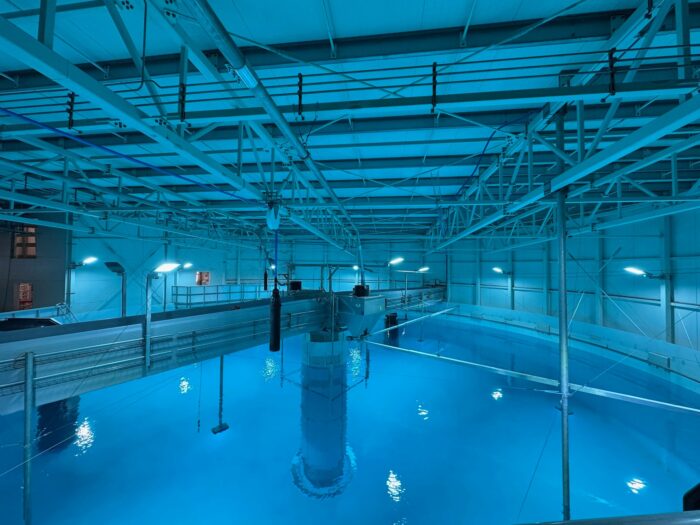
The ability to consistently grow large, premium salmon in land-based systems often depends on water quality and stability. First Water uses a Hybrid Flow-Through System (HFS) that draws naturally filtered seawater from underground sources shaped by the country’s volcanic geology. Lava fields beneath the facility act as a natural bio-filter, allowing clear subterranean seawater to flow continuously into the grow-out tanks.
By combining fresh inflow with partial recirculation, the system maintains a steady exchange of clean, pathogen-free water while preventing the buildup of compounds that can affect taste and quality. The constant flow helps maintain an environment designed to support structurally firm salmon with a clean flavor profile.
Environmental stability is another key factor. Natural geothermal activity keeps the incoming seawater at a consistent temperature of about 7–9°C year-round, while large enclosed tanks protect the fish from weather, predators, and external stress. Advanced biomass monitoring helps manage stock levels and growth, creating a controlled farming environment that avoids the need for antibiotics, pesticides, or chemical treatments.
Sustainability is also central to the operation. The facility runs on Iceland’s renewable geothermal and hydroelectric energy, while salmon are transported to North American markets primarily by sea freight to reduce emissions associated with air cargo. Production byproducts are reused to produce organic biofertilizers, reflecting a circular approach that aligns with growing demand in the U.S. seafood market for reliable, premium-quality salmon produced with lower environmental impact.
For more information about First Water’s land-based salmon farming in Iceland, visit https://www.firstwater.is/